


Barrel Back Dining Chair Guide: 5 Spaces Where Curves Excel

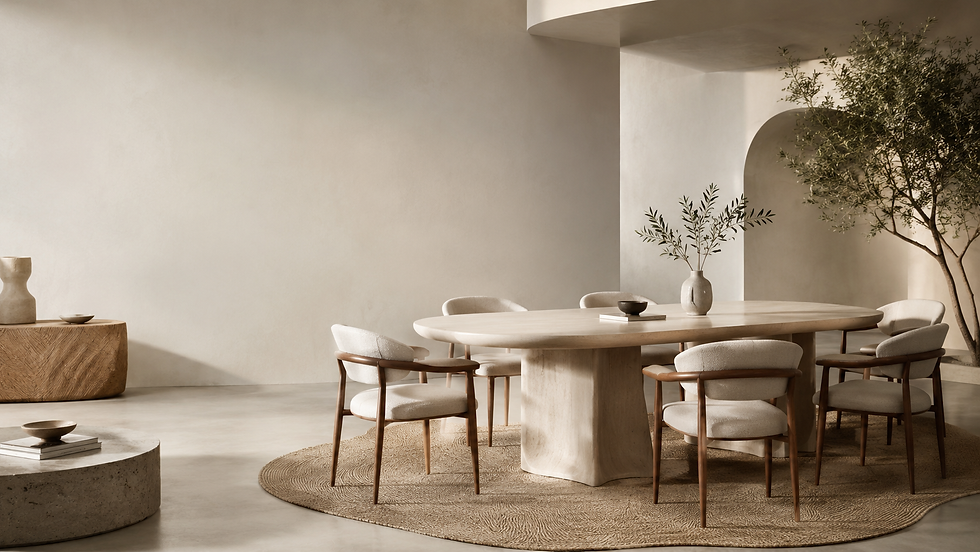
A barrel back dining chair introduces continuous curved architecture, wrapping the sitter in an unbroken backrest and integrated arm profile. While traditional linear chairs rely on open vertical slats or tall planar backs, the curved dining silhouette anchors a space through perimeter geometry and sculpted volume.
Directly answering the central styling question: curved barrel profiles perform best where you need to soften rigid architectural lines, anchor open layouts, or echo circular table geometry without overcrowding movement paths. However, because their continuous wrap possesses greater visual mass than armless side chairs, placement requires deliberate planning around table aprons, sightlines, and chair spacing.
At a Glance: Evaluating Curved Dining Profiles
Primary Strength: Continuous wraparound support that visually grounds large rooms and complements round tables.
Best Environments: Open-concept floor plans, dedicated formal dining rooms, circular breakfast alcoves, and host positions on substantial rectangular tables.
Key Restriction: Tight rooms with narrow circulation paths or tables with deep drop-down aprons that block integrated arms.
Essential Pre-Purchase Check: Measure the distance from the finished floor to the bottom of your table apron against the chair's arm height, ensuring at least 2 inches of clearance.
Room Configuration | Recommended Layout Role | Primary Spatial Benefit | Key Consideration |
Open-Concept Great Room | Full perimeter set or low-profile grouping | Softens sightlines between kitchen and living zones | Keep chair backs lower than kitchen island counters |
Round Dining Table | Symmetrical 4 to 6 chair arrangement | Conforms naturally to circular tabletop geometry | Leave 24–28 inches of perimeter clearance per chair |
Long Rectangular Table | Captain’s / Host chairs at table ends | Adds architectural hierarchy without crowding side runs | Ensure end overhang allows chair arms to tuck inward |
Enclosed Formal Dining Room | Unified full-room set | Creates an intimate, cocooned hospitality experience | Requires generous walkway clearance (minimum 36 inches) |
Curved Breakfast Nook | Paired freestanding chairs opposite a banquette | Mirrors built-in architectural curves | Select low-profile silhouettes to avoid blocking natural light |
The Architectural Logic of the Barrel Back Dining Chair
Unlike conventional side chairs that emphasize verticality, a barrel back dining chair prioritizes horizontal continuity. Originating from early tub and barrel furniture typologies, the modern iteration balances structural presence with understated refinement.
When viewed from behind—which is how dining seating is experienced most often in residential interiors—the barrel profile presents a serene, continuous curve. This seamless shape eliminates visual clutter caused by visible joints and varied post angles, establishing an intentional, collected atmosphere in contemporary homes.
5 Spaces Where the Curved Shape Works Best
1. Open-Plan Living and Dining Suites
In expansive open layouts, rectilinear dining tables and linear chairs often disappear or create an unintended grid of repetitive legs. A curved profile breaks these orthogonal axes.
Because the rear envelope of a curved chair is solid and sculptural, it acts as a soft architectural boundary between cooking, dining, and lounging areas. It defines the dining zone as a distinct destination rather than an extension of the kitchen island.
2. Dedicated Round Dining Tables
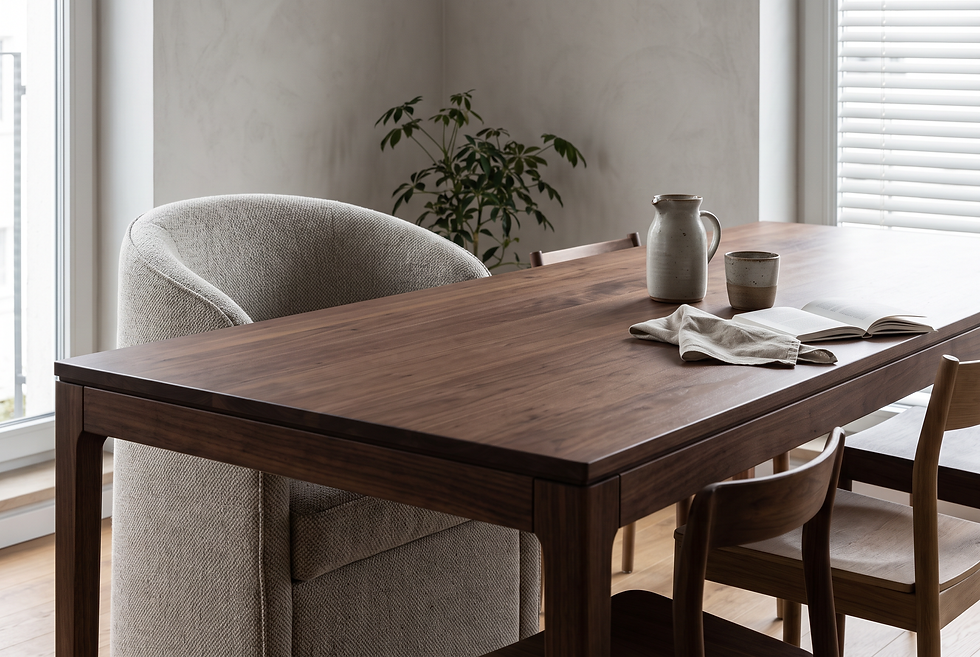
Pairing angular, square-backed chairs with a circular table creates geometric friction. A continuous curved backrest naturally follows the circumference of a round dining table, maintaining an effortless visual flow.
This configuration ensures every seat relates symmetrically to the center of the table. To maintain balance, select silhouettes whose curvature matches the arc of your tabletop diameter.
3. Host Positions at Substantial Rectangular Tables
If you prefer lightweight side chairs along the long edges of a rectangular table, anchoring the head and foot with a pair of curved chairs introduces immediate character.
This hybrid approach provides the ergonomic luxury of an armchair for dinner hosts while keeping side circulation light. It works exceptionally well with thick solid wood tables, ceramic tops, or pedestal bases.
4. Formal Dining Rooms with Architectural Moulding
In rooms framed by classic wainscoting, wall panelling, or bold ceiling treatments, high-back angular chairs can overwhelm the vertical rhythm. A mid-height barrel profile keeps the visual weight low, allowing wall details and statement lighting to remain the focal point.
The enveloping shape also improves acoustical comfort and encourages lingering conversation during multi-course gatherings.
5. Sunlit Breakfast Nooks and Bay Windows
Curved alcoves and bay window dining areas demand furniture that respects ambient natural light. Placing a low-slung curved chair in these zones prevents window sills from being visually sliced by tall vertical rails.

The rounded profile softens architectural corners and welcomes morning light effortlessly across the room.
When a Curved Chair Feels Too Heavy (And What to Avoid)
While elegant, continuous curved silhouettes can overwhelm a room when misapplied. Consider these critical constraints before selecting your pieces:
Avoid in Narrow Walkways: If the distance between your table edge and the nearest wall or sideboard is under 32 inches, the closed structure of an enclosed chair will impede easy movement.
Avoid Dense Leg Assemblies with Pedestal Tables: If your table features multiple ornate central pedestals, pair it with clean, tapered chair legs rather than heavy plinth bases to avoid visual competition beneath the surface.
Watch the Table Apron Height: Tables with thick aprons or pull-out drawer boxes can prevent integrated chair arms from sliding underneath, pushing chairs out into the walkway when not in use.
Clearance and Proportion Rules for Seamless Integration
To ensure your dining arrangement feels deliberate and functional, follow these proven architectural guidelines:
Arm-to-Apron Clearance: Verify at least 1.5 to 2.5 inches of clearance between the top of the chair arm and the underside of the table apron.
Lateral Chair Spacing: Allocate a minimum of 24 inches (ideally 26–28 inches) of table perimeter per chair. Curved backs sweep wider at the shoulders, requiring additional lateral breathing room.
Circulation Perimeter: Maintain 36 to 42 inches between pushed-in chair backs and walls to allow effortless passing behind seated guests.
Proportion to Table Scale: Match the visual weight of your chairs to your table base; delicate hairpin legs will look mismatched beside fully upholstered barrel forms.
Planning Your Interior Selection
Selecting the right dining seating requires balancing tactile comfort, structural scale, and long-term durability. When reviewing potential designs, look for balanced proportions, enduring joinery, and tailored upholstery that maintains its form over years of daily gatherings.
FAQ
Can I use a barrel back dining chair with a rectangular table?
Yes. You can place barrel back chairs around the entire perimeter of a substantial rectangular table if space permits, or position a pair exclusively at the head and foot as host chairs to balance visual weight.
How much clearance is needed behind a barrel back dining chair?
You should maintain at least 36 inches of clearance from the edge of the dining table to the nearest wall or piece of furniture to allow seated guests to rise and move comfortably.
Do curved dining chairs work well in small dining rooms?
They can work in compact spaces if you choose low-back silhouettes with elevated, slender legs rather than solid plinth bases, preventing the room from feeling visually crowded.
How do I ensure the chair arms fit under my dining table?
Measure from the floor to the lowest point of your table's apron or support structure. Select a chair whose maximum arm height is at least 1.5 to 2 inches lower than that measurement.
Find the Perfect Proportions for Your Dining Space
Share your table shape and room photo with our design specialists to see whether a barrel-back profile fits your layout, or save your favorite silhouettes to your project board for tailored layout advice.


Comments