


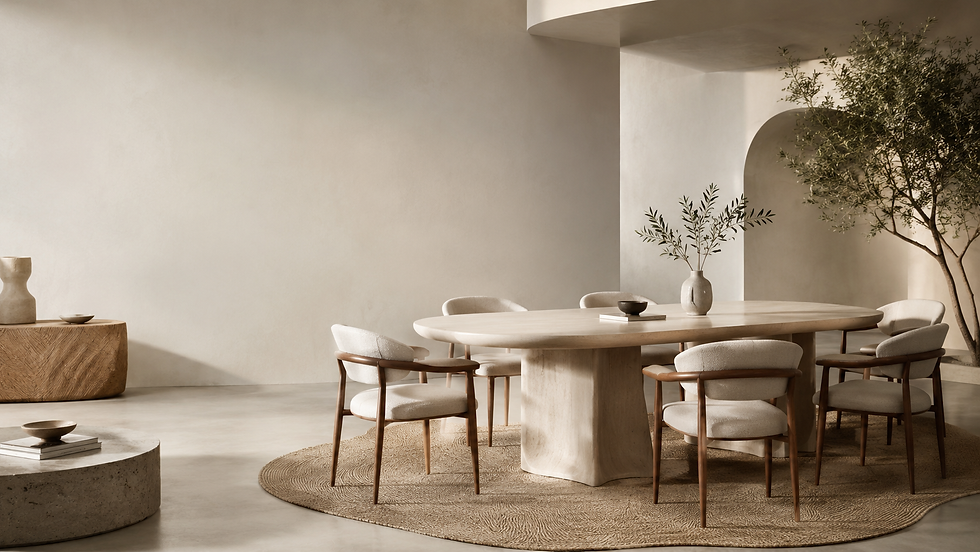
Green Dining Chairs Set of 4: All-Green Drama vs. Subtle Accent Pairs

Bringing botanical richness into the dining room is one of the most enduring ways to anchor an interior with organic depth and understated luxury. Yet moving from an aspirational mood board to an actual order presents a fundamental styling dilemma: should you commit entirely to a green dining chairs set of 4, or introduce green gently through a two-tone accent arrangement?
Green is unique among dining room colors. Because our eyes perceive more gradations of green than any other hue, it functions simultaneously as a grounding neutral and a vivid artistic statement. The decision between uniform color immersion and rhythmic contrast dictates the room’s visual weight, acoustic warmth, and architectural flow.
Whether your interior leans toward tailored mid-century warmth, raw architectural minimalism, or layered European heritage, mastering the distribution and cadence of your seating ensures your dining space feels composed rather than chaotic.
The Visual Impact of a Green Dining Chairs Set of 4
Choosing a full green dining chairs set of 4 creates instant architectural coherence. When all four seats share the same chromatic envelope, the dining zone becomes a singular visual anchor. This unified approach eliminates visual fragmentation, allowing the silhouette of your dining table and surrounding millwork to shine.
A four-chair green ensemble works exceptionally well in open-concept floor plans where visual boundaries are necessary. By concentrating deep forest, olive, or muted eucalyptus around the dining surface, you delineate the eating zone from the adjoining living area without requiring heavy room dividers or loud accent walls.
To make four identical chairs feel layered and effortless rather than monolithic, focus on texture and light play:
Matte Textures: Washed linen, tactile bouclé, or brushed wool absorb light softly, muting high-saturation greens and lending an editorial, lived-in softness.
Lustrous Surfaces: Low-pile cotton velvet or refined corduroy catches ambient light along seat curves, introducing natural highlights and shadows that prevent four matching chairs from looking flat.
Leg Finishes: Pair the upholstery with matte black steel for sculptural contrast, or warm smoked oak and walnut to emphasize an organic, grounded atmosphere.
The 2+2 Accent Pairing: Creating Rhythm and Air
The 2+2 setup—pairing two green chairs with two neutral chairs—introduces intentional asymmetry and casual sophistication. Rather than declaring green as the dominant foundation, this arrangement treats it as a curated visual counterpoint.

This approach is particularly valuable in compact dining spaces or rooms with limited natural light, where four saturated chairs might visually compress the floor area. Introducing two complementary chairs in ecru linen, natural cane, toasted oat wool, or warm leather creates breathability around the table.
When orchestrating a 2+2 scheme, consider how the chairs sit relative to sightlines upon entering the room:
Parallel Placement (Opposite Sides): Placing two green chairs along one long side of a rectangular table and two neutral chairs along the other creates an intentional color-block dynamic. This works best when one side faces a wall and the other faces an open walkway.
Alternating Placement (Checkerboard): Alternating colors across from one another delivers a playful, bistro-inspired ambiance. Ensure both chair models share identical or closely matched heights to maintain visual harmony.
Same Model, Split Palette: Using the exact same chair model in two distinct colors keeps the look refined and intentional, preventing the table from feeling like an accidental assembly of mismatched furniture.
The End-Chair Strategy: Host Positions in Green
For rectangular or oval tables, reserving green exclusively for the head and foot of the table while surrounding the flanks with quiet neutrals creates a classic host-and-hostess cadence. This layout draws the eye through the room along the table’s primary axis, elongating the perceived length of the space.
When using green exclusively on end chairs, you have permission to choose slightly more sculptural silhouettes or armchairs, provided their scale complements the side chairs. The deep botanical tones at each end act as elegant bookends, framing communal meals with structured warmth.
Layout Strategy Comparison for Green Seating
Choosing the right configuration depends on your room size, table profile, and overall design philosophy. Review the core dynamics below to identify your ideal layout:
Configuration | Visual Weight | Ideal Room Size | Best Table Shapes | Design Character |
4× Uniform Green | Medium to Heavy | Medium to Expansive | Round, Square, Rectangular | Monolithic, grounded, serene, museum-like stillness |
2+2 Parallel Split | Balanced & Airy | Small to Medium | Rectangular, Oval | Dynamic, tailored, contemporary European casualness |
2 End Host Chairs | Directed & Formal | Medium to Long Rectilinear | Long Rectangular, Boat-Shape Oval | Traditional architectural grounding, elongated axis |
Tonal Ombré (4 Greens) | Rich & Layered | Any Open Concept | Round, Soft Organic Forms | Collector's aesthetic, artisanal depth, soft contrast |

Echoing Green: Room Cadence and Color Distribution
A common interior design mistake is allowing green dining chairs to sit in absolute isolation. To make green feel woven into the architecture of your home, echo the undertone across the room in measured, quiet increments.
Follow the rule of subtle repetition to create cohesion without over-coordinating:
Ceramics and Tableware: Display unglazed stoneware with mossy glaze accents or matte sage serving bowls on open shelving or a nearby credenza.
Botanicals and Flora: Lean into sculptural branches—such as olive leaves, eucalyptus, or fig branches—in heavy ceramic vases to bring living greens into dialog with upholstered surfaces.
Textiles and Rugs: Anchor the table with a neutral jute, sisal, or wool rug featuring subtle olive border stitching or moss undertones running through an un-dyed weave.
Artwork: Frame abstract architectural sketches or botanical lithographs with muted sage matting or olive ink highlights on adjacent walls.
Finding Your Green: Undertones and Light Exposure
The direction and quality of natural light in your dining space dramatically alters how green pigment behaves throughout the day.
North-Facing Rooms: Northern light tends to be cool and slightly blue. Pair this exposure with warm olive, artichoke, or moss greens with yellow and brown undertones to counteract chilliness.
South-Facing Rooms: Flooded with golden light throughout the day, south-facing spaces can handle cool forest greens, deep pine, and eucalyptus without turning somber.
East and West Light: Morning and evening sun shift dramatically from crisp light to warm amber. Sage and laurel green transition seamlessly through these temperature swings.
Step-by-Step Selection Framework
Before finalizing your dining chair order, run through this practical checklist to validate your aesthetic direction:
Assess Visual Mass: If your table is dark stained wood (such as wenge or dark walnut) and your room has standard ceiling heights, a 2+2 combination prevents excessive visual density.
Evaluate Flow: In compact open-plan apartments, 4 matching sage or muted olive chairs provide a calming, uniform silhouette that reduces clutter.
Confirm Material Practicality: Ensure fabrics intended for daily dining feature durable weaves or performance finishes, especially when selecting pale sage or high-saturation emerald.
Balance the Surrounding Palette: Pair green upholstery with brass or blackened iron hardware, natural stone accents, and linen window treatments for timeless balance.
FAQ
Can I mix four green chairs if they are different models?
Yes, but maintain discipline by keeping either the material (e.g., all velvet or all matte wood) or the undertone consistent so the grouping feels curated rather than accidental.
What table wood species pair best with green dining chairs?
Warm white oak, natural walnut, and smoked ash pair exceptionally well with green, creating an organic, grounded contrast that softens both cool and warm undertones.
Does a 2+2 dining chair layout look incomplete?
Not when executed intentionally. Using the same chair model in two complementary colors or pairing two green armchairs with neutral side chairs delivers a high-end, tailored look.
How do I choose between olive green and emerald green for dining chairs?
Olive green offers an understated, earthy elegance that blends effortlessly with natural woods, while emerald green provides a bold, jewel-toned dramatic statement suited for formal spaces.
Find Your Perfect Dining Harmony
Send us your favorite green fabric swatch alongside a photo of your dining table. Our interior specialists will prepare a custom visualization comparing a 4× green setup against a curated 2+2 arrangement.


Comments