


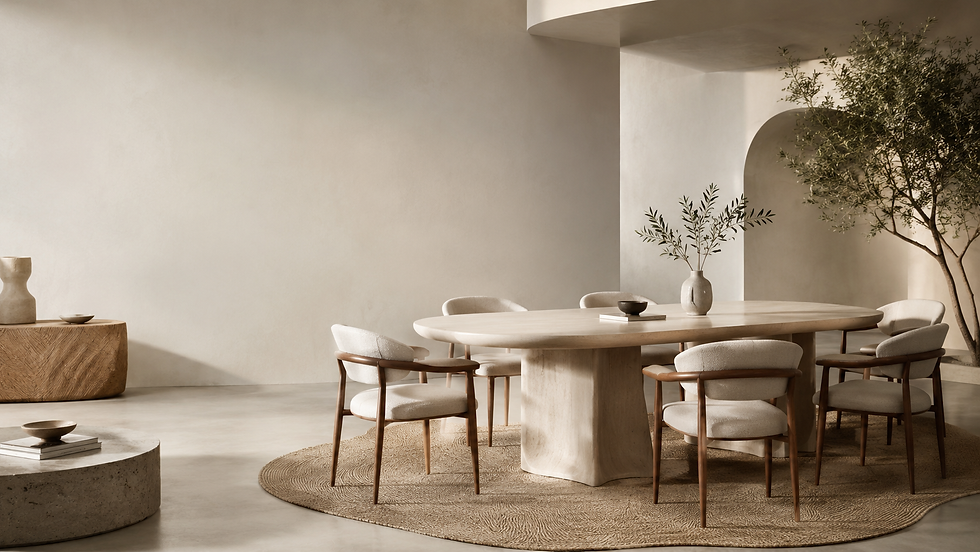
Luxury Dining Chairs: 7 Structural Features Worth Checking

When shopping for luxury dining chairs, visual appeal is often the easiest quality for manufacturers to replicate. A chair can look sculptural in an editorial catalog or digital showroom while falling short in weight distribution, structural stability, or long-term ergonomic support. Distinguishing authentic residential refinement from elevated retail pricing requires looking beneath surface styling.
At a glance, genuinely well-crafted seating balances durable joinery, density-calibrated cushioning, deliberate seam placement, and authentic material disclosure. Before committing to a full dining set, use the following criteria to audit construction quality, spatial proportion, and everyday comfort in your home.
Evaluating Luxury Dining Chairs: The Core Assessment Framework
True quality in seating is rarely defined by ornate decoration or exaggerated silhouettes. Instead, high-end seating earns its standing through architectural balance, tactile honesty, and structural longevity. When evaluating luxury dining chairs for your space, consider four primary assessment pillars:
Structural Honesty: Clear disclosure of internal frame composition, load-bearing joints, and finish methods rather than generic material descriptions.
Tactile Ergonomics: Cushioning systems and lumbar support contours that maintain resilience during multi-hour dinners without bottoming out or creating pressure points.
Proportional Discipline: Silhouettes that maintain visual breathing room around the dining table while delivering generous seated comfort.
Everyday Practicality: Textiles, leathers, and surface finishes engineered to age gracefully alongside regular residential life, dinner parties, and daily routines.
7 Structural Features of High-End Luxury Dining Chairs
1. Frame Substructure and Weight Distribution
The internal skeleton determines how a chair handles daily movement, shifting seated postures, and years of regular use. High-caliber dining seating typically relies on kiln-dried hardwood frames, reinforced metal substructures, or precision-molded internal shells.
When handling luxury dining chairs in person or reviewing specifications, examine how weight is balanced. Lift the chair slightly by the upper backrest and gently test lateral rigidity. A well-engineered frame resists twisting, creaking, or flexing. Weight should feel grounded and evenly distributed near the base, preventing tipping when someone leans back or rises from the table.
2. Tailoring, Seam Tension, and Foam Density
In upholstered dining seating, tailoring reveals the standard of manufacturing faster than almost any other element. Inspect corners, welt cords, and perimeter piping. Seams should run perfectly straight, with even stitch tension and no puckering across curved contours or corners.
Cushioning must strike a calibrated balance between initial softness and structural support. High-resilience, multi-density polyurethane foams or molded cold-cured foams provide immediate pressure relief while springing back instantly after use. Avoid chairs with thin single-density padding that compresses directly against internal support rails.

3. Silhouette Integrity and Visual Rhythm
Dining chairs are rarely viewed in isolation; they are seen as a repetitive rhythm around a table. A successful design retains its architectural profile from every angle—especially from the rear, which is the perspective most frequently visible in an open-plan dining space or living area.
Notice how the chair's backrest meets the seat pan. Does the line taper gracefully, or does it feel bulky? Well-proportioned luxury dining chairs offer supportive seat depth and generous comfort without overwhelming the perimeter of the dining area or blocking sightlines across the room.
4. Material Transparency and Natural Finishes
Reputable makers provide specific information about materials rather than relying on ambiguous marketing terms. Look for explicit disclosures regarding wood species (such as solid European ash, white oak, or American walnut), leather grades (full-grain or top-grain versus bonded composites), and textile compositions.
Finishes should celebrate natural grain rather than concealing it beneath thick, plasticized topcoats. Hand-applied oils, matte lacquers, or subtle wire-brushed textures highlight organic character while resisting micro-scratches from daily table settings and dinnerware handling.
5. Armrest Geometry and Table Apron Clearance
Armchairs bring warmth and comfort to the dining table, particularly when positioned at the head of the setting. However, poorly calculated arm heights frequently collide with table aprons or under-mount support rails, damaging both surfaces.
Measure the vertical distance from the floor to the highest point of the chair arm. Ensure a minimum clearance of 1.5 to 2 inches beneath the lowest point of your tabletop or apron. This allows luxury dining chairs with arms to tuck cleanly out of walkways when not in use, preserving spatial flow.
6. Base Construction, Leg Splay, and Floor Contact
The junction between the seat and legs bears the brunt of everyday mechanical stress. Look for integrated corner blocks, mortise-and-tenon connections, or concealed steel mounting plates rather than simple surface screws.

Leg splay should feel intentional. A subtle angle enhances stability, but excessive flare creates tripping hazards around tight dining perimeters. Premium seating integrates durable, factory-fitted nylon, felt, or brass glides designed to protect delicate flooring.
7. Spatial Adaptability and Mixed-Material Cohesion
A dining set should suit both intimate daily breakfasts and extended dinner gatherings. Evaluate how multiple chairs interact when placed side by side. Designs with open lower profiles, refined spindle details, or cantilevered bases allow natural light to filter through, preventing the dining area from appearing visually crowded.
Pairing contrasting textures—such as tactile bouclé upholstery or smooth leather against a solid timber or stone tabletop—creates visual depth that outlasts transient design trends.
Craftsmanship Comparison: Quality Indicators at a Glance
Assessment Category | Benchmark Quality Standard | Red Flag Indicator |
Frame Joinery | Kiln-dried hardwood with corner blocks, mortise-tenon, or steel | Stapled softwoods, visible glue overflow, lateral flex |
Upholstery Execution | Straight stitching, high-resilience foam, uniform tension | Wavy seams, loose fabric pooling, foam bottoming out |
Material Disclosure | Specified timber species, graded leathers, tested textiles | Vague terms like "hardwood solids" or "eco-leather" |
Armrest Fit | Smooth taper with 1.5" to 2" clearance below table aprons | Abrupt blocky profiles that scrape table edges |
Base & Floor Contact | Integrated leveling or felt/nylon floor protective glides | Unfinished leg bottoms or rough, scratch-prone caps |
Ergonomic Pitch | Balanced 100° to 105° recline with supportive seat depth | Flat, upright 90° backrests causing lumbar fatigue |
How to Audit Your Dining Room Layout Before Purchasing
Before finalizing your selection, map out the physical footprint of your dining space to ensure effortless movement and ergonomic comfort:
Allow 24 to 30 inches per seat: Measure the perimeter of your table to confirm each diner has adequate elbow room without bumping adjacent chairs.
Preserve a 36-to-48-inch walkway: Ensure ample clearance between the back of pushed-back chairs and surrounding walls, sideboards, or kitchen islands.
Coordinate Seat Height to Tabletop: Maintain a comfortable 10 to 12 inches of vertical clearance between the chair seat top and the dining surface.
Test Sightlines Across Open Plans: Ensure chair back heights complement rather than obstruct views toward windows or adjacent entertaining zones.
FAQ
How heavy should high-quality luxury dining chairs feel?
A well-built dining chair should feel substantial and grounded without being cumbersome to pull out. Structural stability comes from dense hardwoods or reinforced metal cores, usually weighing between 18 and 28 pounds depending on whether it is an armless side chair or a fully upholstered armchair.
Are upholstered luxury dining chairs practical for everyday family dining?
Yes, provided the textiles are tightly woven and treated for stain resistance or specified in durable top-grain leathers and high-rub-count fabrics. Avoid loosely woven linens or delicate surface coatings in homes with frequent daily use.
Should all dining chairs match the dining table material exactly?
Not necessarily. Modern interior design often favors intentional contrast over exact matching. Pairing a solid timber table with upholstered, leather, or subtle metal-framed chairs introduces textural depth and prevents the dining space from feeling monolithic.
What is the recommended seat height for a standard dining table?
Standard dining tables typically range from 29 to 30 inches in height. A compatible dining chair should feature a seat height between 18 and 19.5 inches, leaving comfortable clearance for thighs and posture adjustment.
Plan Your Dining Space with Confidence
Send your shortlist and room photo for a side-by-side fit review with our interior team.


Comments