


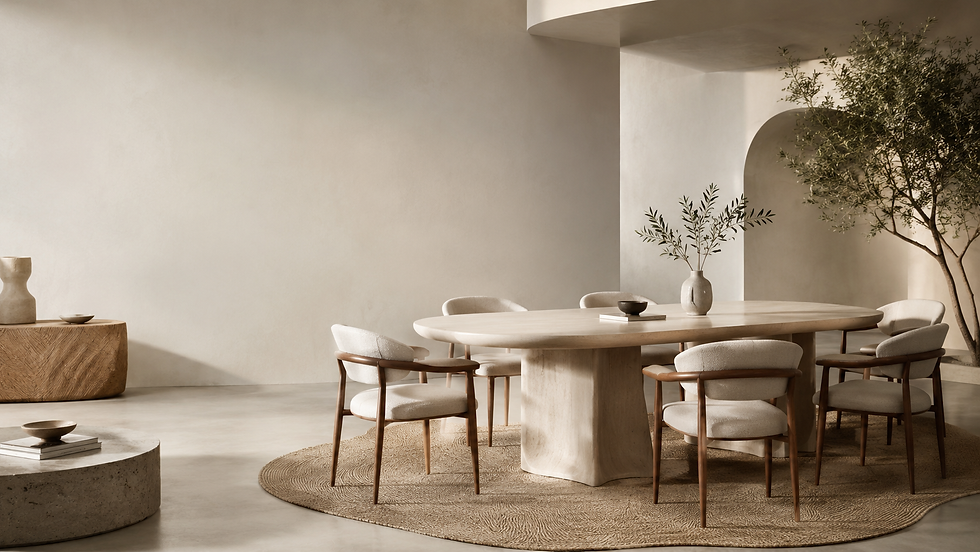
Oval Back Dining Room Chairs: 5 Ways the Silhouette Elevates Your Space

At a Glance: How Oval Back Dining Room Chairs Transform Interior Spaces
Dining rooms frequently suffer from an excess of rigid geometry. Rectangular dining tables, rectilinear architectural moldings, framed artwork, and square area rugs can quickly make an open-plan or dedicated dining space feel overly severe. Introducing oval back dining room chairs immediately counters this sharp spatial tension.
By replacing hard vertical stiles and squared crest rails with continuous, curving perimeters, the oval back acts as a soft architectural mediator. It draws the eye upward without obstructing light, establishes gentle symmetry across the tabletop, and softens the visual transition between living zones and dining areas.
Whether upholstered in textured neutral fabrics or detailed with refined wood borders, oval back seating introduces classical composure into contemporary American dining rooms without leaning into ostentatious luxury.
1. Breaking Rigid Geometry with Continuous Curves
Most modern dining rooms are defined by horizontal and vertical intersections: long table surfaces, straight baseboards, and sharp casework. When standard rectangular chairs are added to this arrangement, the dining area often feels blocky and visually dense.
Oval back chairs interrupt these continuous perpendicular angles. The rounded silhouette introduces organic movement that balances the sharp edges of rectangular or trestle tables.
Spatial Softening: The arched upper frame naturally guides ambient light around the backrest rather than creating flat shadow blocks.
Visual Weight Distribution: Because the widest point of an oval sits at mid-height, the upper visual plane remains airy, allowing wall treatments or window views to breathe.
Best Architectural Context: Ideal for open-concept floor plans, boxy dining rooms, or spaces anchored by substantial solid-wood rectangular tables.
2. Calibrating Vertical Height and Unobstructed Sightlines
The vertical dimension of dining chairs dictates whether a dining space feels intimate, formal, or overcrowded. Traditional tall ladder-back chairs can visually divide an open room like a fence, while low-slung bucket chairs often lack the presence needed to ground a large dining setting.
Oval back designs strike a deliberate balance in vertical proportion. The tapered arch naturally rises above the tabletop plane without presenting an unbroken wall of upholstery.

Preserving Open Sightlines: In homes where the dining space opens into a living room or kitchen island, the rounded shoulders of oval chairs let the eye travel continuously across adjacent areas.
Vertical Rhythm: Arranging six to eight oval back silhouettes along a long table creates a steady, rhythmic visual cadence rather than a monotonous horizontal barrier.
Room Scale Considerations: High ceilings benefit from the upward arch, while standard eight-foot ceilings feel taller because the curves avoid hard horizontal ceiling-parallel lines.
3. Enhancing Seating Symmetry Across Table Settings
Visual balance around a dining table relies on how individual place settings interact with each chair's profile. Squared chairs can emphasize minor misalignments, whereas oval back dining room chairs create natural framing for each place setting.
Because an oval is inherently bilateral and balanced, it centers the diner within their setting. This geometric harmony is especially valuable in formal entertaining layouts or symmetrically framed dining alcoves.
Table Centerline Harmony: Paired neatly opposite one another, oval backs mirror each other cleanly, anchoring table runners, pendant lighting, and centerpieces.
Pendant Alignment: The rounded crest of an oval complements circular chandeliers, linear multi-light fixtures, and dome pendants equally well.
Corner Clearance: At the corners of rectangular tables, the curved profile prevents visual collisions and makes movement around the perimeter feel noticeably smoother.
4. Balancing Upholstery Volume and Negative Space
Chair selection often forces a difficult compromise between the tactile comfort of full upholstery and the structural lightness of an exposed frame. Oval backs resolve this trade-off through well-defined negative space.
Depending on construction, oval backs often feature an upholstered central medallion set within a wooden perimeter, or a fully upholstered pad with refined edge piping.
Medallion Backs: Provide tailored lumbar cushioning while keeping the outer silhouette crisp and defined.
Negative Space Airiness: The space between the outer curve of the chair and the tabletop creates natural breathing room, reducing visual bulk.
Fabric Versatility: Matte linens, refined bouclés, and smooth woven textiles highlight the oval perimeter through subtle texture rather than loud patterning.

5. Pairing Oval Back Profiles with Diverse Table Bases
A dining set feels deliberate when the chair silhouette echoes or balances the foundation beneath the table. Oval back dining room chairs work across multiple table typologies when proportions are carefully matched.
Table Typology | Silhouette Interaction | Why It Works | What to Verify Before Buying |
Solid Rectangular Pedestal | Contrast & Balance | Curved chair backs soften the heavy, grounded aesthetic of substantial pedestal bases. | Ensure at least 24 inches of lateral clearance per place setting. |
Round or Oval Dining Table | Geometric Harmony | Concentric curves create a unified, cohesive design language throughout the setting. | Confirm chair depth allows complete tuck-in without touching center pedestals. |
Slim Trestle Table | Architectural Rhythm | The vertical oval balances long, linear table expanses and horizontal stretchers. | Check armchair height relative to the table apron if armchairs are used at head positions. |
Tapered Four-Leg Table | Classic Restraint | Slender chair legs align with tapered table legs while the rounded back adds softness. | Measure distance between inner table legs to ensure chairs nest comfortably. |
Selection Framework: Choosing the Right Oval Back Profile
When evaluating different oval back designs for your dining room, consider three core functional criteria:
Proportion and Scale
Assess the ratio between table length and chair width. Standard oval back chairs generally span 19 to 22 inches in width. Maintain at least 6 inches of space between adjacent chairs to allow the curved silhouette to be appreciated as an individual design element rather than a crowded cluster.
Frame Material and Texture
Warm, natural wood finishes ground the classical shape in a contemporary palette. Light oak, walnut, or muted greige finishes prevent the silhouette from feeling overly antique, bridging traditional craftsmanship with modern architectural restraint.
Textile Weight and Tone
Opt for matte, tightly woven upholstery in neutral tones—such as warm cream, oat, stone gray, or subtle moss. These tones let the geometric shape remain the primary focal point without competing with surrounding architectural finishes.
FAQ
Do oval back dining room chairs work with contemporary interior styles?
Yes. When finished in natural matte woods and upholstered in clean, neutral fabrics like linen or subtle wool weaves, oval back chairs offer timeless balance in modern and transitional dining spaces.
How much space should be left between oval back dining chairs?
Plan for at least 24 inches of overall lateral width per chair, which leaves roughly 4 to 6 inches of open space between seat cushions so the distinct curved silhouette remains visually clear.
Are oval back chairs better suited for rectangular or round tables?
They pair exceptionally well with both. On rectangular tables, they soften rigid linear profiles; on round or oval tables, they reinforce fluid geometric harmony.
How do I ensure oval back armchairs fit comfortably under my table?
Measure from the floor to the lowest edge of your table apron, and verify that the chair armrests have at least 1.5 to 2 inches of clearance for effortless tucking.
Refine Your Dining Space
Save your preferred oval-back look to your project board and request a personalized table-to-chair pairing review to ensure optimal scale, clearance, and comfort.


Comments