


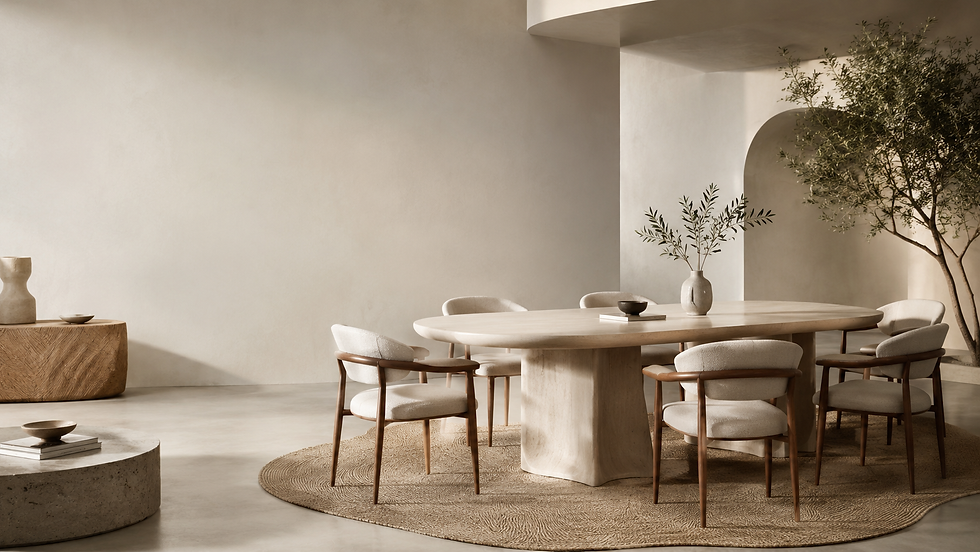
Styling Wood Dining Chairs: How Much Natural Timber Does Your Space Need?

The Visual Weight of Wood Dining Chairs in Modern Interiors
Natural timber introduces an innate sense of grounded warmth, tactile richness, and architectural authenticity into contemporary homes. Yet, in modern interior design, achieving an elegant equilibrium requires a thoughtful understanding of material proportions. When integrating wood dining chairs into a dining layout, the goal is rarely to match every timber element identically. Rather, refined spaces thrive on intentional contrast, optical balance, and the conscious management of surface textures.
Over-saturating a dining space with continuous wood surfaces can quickly produce an unintended visual heaviness. When flooring, tabletops, and chair frames all compete with dominant wood grain, the eye struggles to find a resting point, causing the room to feel dense and traditional. Conversely, eliminating organic textures altogether yields spaces that feel stark, clinical, and devoid of soul. The key lies in calibrating the visible surface area of timber—discerning whether your room benefits from full-frame timber seating, slender wooden legs, or hybrid designs that pair natural wood with structured upholstery.
By viewing your dining environment as an interconnected composition of horizontal planes and vertical silhouettes, you can curate a setting that radiates quiet, understated luxury while remaining light, open, and functional for modern living.
The Three-Layer Ratio: Flooring, Tabletop, and Seating
To establish harmony, interior architects analyze the dining area across three primary horizontal layers: the foundational flooring below, the dining table surface above, and the transitional mid-zone occupied by your seating. Each plane carries a specific visual weight that dictates how much additional grain the space can absorb.
When your dining space features existing parquet or hardwood planks paired with a solid timber table, adding chairs crafted entirely from exposed wood can result in visual saturation. In this context, seating that utilizes slender, tapered wood legs combined with tailored fabric bodies acts as a critical visual buffer. The textile softens the vertical transition between the floor and the tabletop, allowing the distinct craftsmanship of each piece to stand out rather than blend into an indistinguishable mass.
On the other hand, dining rooms built on neutral, monolithic foundations—such as micro-cement screed, polished concrete, or large-format matte porcelain tiles—present the opposite spatial requirement. These cool, continuous surfaces actively benefit from the grounding warmth of timber. Introducing chairs with prominent wood backrests or sculpted wooden silhouettes reintroduces organic warmth, creating a tactile focal point that anchors the entire room.
Material Harmony Matrix: Balancing Surfaces and Frames
Selecting the right chair configuration depends heavily on how your existing architecture interacts with your table surface. Use the comparative matrix below to identify the most balanced seating approach for your specific architectural foundation.

Flooring Foundation | Dining Table Finish | Recommended Chair Architecture | Key Balancing Accents |
Parquet or Solid Hardwood | Solid Wood Table | Slender wood legs with upholstered seat & back | Low-pile wool rug, brushed metal lighting, linen drapery |
Parquet or Solid Hardwood | Natural Marble, Glass, or Quartz | Prominent wood frames with subtle fabric cushions | Ceramic vessels, matte black table frame, organic greenery |
Polished Concrete / Screed | Solid Wood Table | Mixed-material chairs with wood legs and textured weaves | Monochromatic artwork, blackened steel details, soft neutral rug |
Large-Format Matte Tile | Travertine, Slate, or Cast Stone | Dining chairs featuring warm wood legs and neutral fabrics | Warm brass hardware, textured linen table runners, matte stoneware |
Light Oak or Ash Flooring | Dark Walnut or Smoked Wood Table | Two-tone chairs or refined wood legs matching table tone | High-contrast pendant light, minimalist wool rug, glass centerpieces |
When Metal Details Prevent Monotony in Wood Dining Chairs
In dining rooms where timber elements already dominate—such as spaces with exposed ceiling rafters, integrated wood cabinetry, or expansive hardwood flooring—introducing fine metallic details prevents aesthetic stagnation. Metal operates as an architectural punctuation mark, catching natural daylight and defining transitions between organic materials.
Subtle metal elements do not detract from the organic character of wood dining chairs; rather, they sharpen their aesthetic precision. Chairs that incorporate muted brass ferrules on chair leg tips, blackened steel under-frames, or understated graphite hardware introduce subtle industrial refinement. These metallic accents interrupt monotonous wood-on-wood contact, providing a crisp, intentional separation between chair legs and matching floorboards.
To preserve a cohesive atmosphere, ensure that the metallic undertones of your seating correspond harmoniously with the room's broader fixture palette. Warm brushed brass and antique bronze enhance the honeyed undertones of natural timber, while matte black, graphite, and patinated bronze offer a graphic, architectural counterweight to paler woods such as ash or natural oak.
Softening Structure: The Critical Role of Upholstery
Upholstery is the ultimate mediator between hard architectural planes and organic timber frames. Beyond enhancing physical comfort during extended dinners, high-grade textiles provide vital acoustic dampening in open-concept living and dining layouts where hard floors and smooth walls cause unwanted reverberation.
Pairing wood dining chairs with textured textiles—such as structured bouclé, tightly woven linen, ribbed chenille, or flat-weave wool—creates a tactile dialogue that enriches the room. The matte, light-absorbing quality of woven fabrics creates a pleasing contrast against the smooth, light-reflective sheen of polished wood legs or backrests. This interaction forms the essence of understated, collected interior styling.

When curating fabric tones to accompany natural wood elements, select grounded, desaturated palettes. Tonal shades of chalk white, warm stone, oat, flannel grey, and deep peat harmonize effortlessly with natural wood finishes. These muted tones allow the organic character of the wood grain to remain the central narrative without visual distraction.
Architectural Line and Leg Density: Keeping Spaces Breathable
Visual balance is as much about negative space as it is about material choice. The density of chair legs clustered around a dining table dramatically impacts how heavy or light the entire arrangement feels within the room.
If your dining table features a monolithic pedestal base, thick trestle legs, or heavy slab supports, pairing it with wide, bulky wooden chair frames creates visual congestion. In such settings, chairs with refined, splayed, or tapered wooden legs maintain essential sightlines beneath the tabletop, preserving an airy, uncluttered feel.
Conversely, if your dining table possesses ultra-slim metal hairpin legs or an ethereal glass top with a minimalist base, chairs with slightly broader, more substantial wood frames provide the grounding visual weight necessary to anchor the dining zone within an expansive room.
Curating Timeless Balance: Practical Guidelines for Your Space
When evaluating whether a specific chair design will achieve material harmony in your dining space, consider these foundational curation principles:
Apply the 60-30-10 Proportional Rule: Allocate approximately 60% of your dining zone to neutral architectural foundations (walls, floors, large rugs), 30% to natural tactile materials (dining table and wood dining chairs), and 10% to metallic or sculptural accents (lighting, hardware, ceramics).
Bridge Similar Tonal Temperatures: You can confidently combine different timber finishes across your floor, table, and chairs as long as their undertones align. Pair warm golden timbers with warm amber tones, and keep cool, ashen finishes within cool grey-brown palettes.
Use Textile Floor Coverings as Visual Dividers: When your chairs and floorboards share similar wood finishes, place a neutral, low-pile area rug beneath the dining suite. The rug acts as an architectural canvas that visually isolates chair legs from the floor, preventing tonal friction.
Prioritize Structural Restraint: Look for chairs where wood is used deliberately to define the silhouette or support structure, allowing clean lines and fabric textures to share the visual workload.
FAQ
Can I pair wood dining chairs with a dining table of a different timber tone?
Yes. Mixing wood tones creates a layered, sophisticated aesthetic as long as the undertones share a consistent temperature—such as pairing warm honey woods together—and there is clear, intentional contrast rather than a near-miss match.
How do I prevent a dining room with wood floors from feeling visually overwhelmed by timber?
Break up continuous grain by choosing chairs that pair slender wooden legs with tailored fabric upholstery, placing a neutral wool area rug beneath the table, and introducing subtle metal accents in lighting or chair hardware.
Are chairs featuring wood legs durable enough for everyday family dining?
High-quality chairs with solid wooden legs offer exceptional structural strength and long-term durability. Equipping the legs with protective floor glides and performing occasional gentle cleaning ensures they remain pristine under daily use.
What is the best way to balance wood dining chairs in an open-plan kitchen and dining area?
Maintain continuity by echoing the chair leg material in subtle architectural elements across the kitchen—such as bar stool bases or open shelving—while using upholstered chair seats to absorb sound and soften large open spaces.
Find the Perfect Material Harmony for Your Dining Room
Unsure how much timber your dining layout can comfortably accommodate? Send us a photo of your tabletop and flooring, and our design consultants will help you select the ideal chair composition.


Comments