


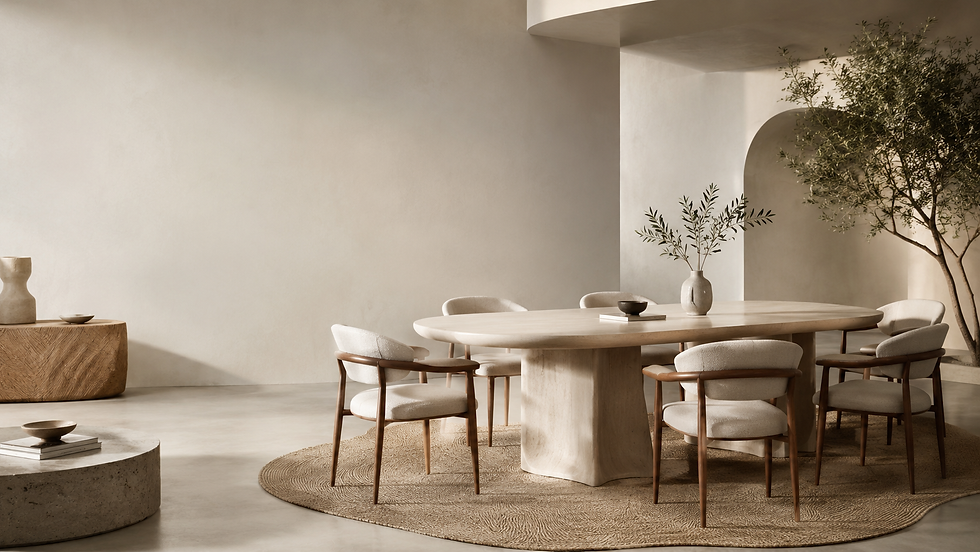
Quiet Craft: 7 Subtle Details to Recognize Quality Dining Chairs

When browsing modern interiors online, almost every dining chair looks immaculate under studio lighting. Yet, many homeowners experience disappointment once the parcel arrives: wobbly legs, uncomfortable seat angles, wrinkled upholstery, or cheap hardware that deteriorates within months.
True luxury in furniture does not announce itself through loud branding or superficial shine. Instead, it lives in "quiet quality"—the balanced weight, seamless transitions, tactile integrity, and enduring ergonomic comfort that make everyday dining effortless.
If you are currently comparing different seating options for your home, this comprehensive evaluation guide breaks down the seven crucial details that define quality dining chairs, helping you evaluate specifications, product photography, and material sheets with confidence.
7 Critical Details That Define Quality Dining Chairs
To separate well-engineered seating from fast-furniture lookalikes, inspect these structural and aesthetic checkpoints before finalizing your order.
1. Visual Balance and Geometric Proportion
A well-designed chair should never look top-heavy or spindly. Proportions determine whether a chair complements your dining area or dominates it awkwardly. Look closely at how the seat thickness relates to the leg diameter.
Seat-to-Base Ratio: Thin metal or tapered wooden legs must feature reinforcing crossbars or an integrated mounting plate when supporting a substantial, padded shell.
Silhouette Grace: Premium seating incorporates gentle curves that invite the body rather than sharp, abrupt edges caused by rushed machine pressing.
Visual Weight: In compact dining rooms, chairs with open lower backs or slim profiles prevent visual clutter, whereas solid, high-back silhouettes require generous room dimensions to breathe.
2. Ergonomic Seat-to-Backrest Relationship
Comfort during long dinner conversations depends on the angle between the seat pan and the backrest. A ninety-degree perpendicular angle creates rigid fatigue, while an excessive recline turns a dining chair into a lounge chair, making upright dining awkward.
Look for a subtle backward slope of roughly 3 to 5 degrees on the seat pan paired with a backrest angle between 100 and 105 degrees. This geometry supports the natural lumbar curve while distributing body weight evenly across the sit bones.
3. Upholstery Precision, Foam Density, and Seaming
For upholstered dining chairs, surface appearance reveals the true standard of internal manufacturing. Poorly made chairs often use low-density poly-foam that sags within a few months, wrapped in loose fabric that forms permanent puckers.
High-Resilience (HR) Cold Foam: Premium chairs specify high-density foam (typically 30–35 kg/m³ or higher), ensuring firm support and long-term shape retention.
Tension and Seam Alignment: Fabric or leather should be pulled taut across every contour without asymmetrical pulling, rippling, or bunched corners.
Stitch Density: Look for tight, uniform stitching with robust double-stitched seams or reinforced piping along high-friction edges.
4. Frame Joinery and Structural Connections
The hidden foundation of any chair determines whether it will wobble after six months of daily use. While flat-pack convenience is common, how parts attach to one another indicates expected longevity.
Internal Frame Materials: Solid hardwoods (such as beech, oak, or ash) or molded steel frames outperform particle board or thin plywood shells.
Joinery Methods: Reliable wooden frames utilize mortise-and-tenon joints, dowels with corner blocking, or heavy-duty steel inserts rather than simple wood screws driven directly into raw timber.
Hardware Integration: Examine whether legs screw into threaded metal inserts welded or secured into the frame rather than surface-mounted brackets prone to stripping.
5. Leg and Base Finishing Details
Whether you prefer minimalist metal bases or classic chairs with wooden legs, inspect the bottom third of the chair with scrutiny. The transition between the upper seat and the legs reveals production care.
Solid Wood Transitions: Authentic solid wood legs should feature smooth sanding across end-grain areas, consistent stain absorption, and matte protective lacquers or oils.
Welds and Metal Coatings: High-grade metal frames showcase clean, ground welds without visible spatter, finished in uniform powder coating rather than fragile spray paint.
Floor Protection: Quality manufacturers include integrated, replaceable screw-in floor glides (felt for hard floors or nylon for carpets) rather than adhesive felt pads that slide off.
6. Transparency in Dining Chair Materials
A brand confident in its craftsmanship openly shares detailed technical specifications for all dining chair materials.
Textiles and Martindale Rub Count: For residential dining, fabric should offer a Martindale abrasion rating of at least 20,000 to 30,000 rubs. Spec sheets should disclose pilling resistance (Grade 4–5) and lightfastness.
Leather Distinctions: Clarify whether the seat uses genuine semi-aniline or top-grain leather rather than polyurethane bonded leather, which cracks and peels over time.
Sustainably Sourced Timber: Reputable makers specify the exact species (e.g., European Oak, FSC-certified Beech) rather than vague terms like "hardwood solids" or "wood effect."
7. True Scale and Clearance with Dining Tables
Even the finest chair becomes frustrating if it clashes with your dining table. Always cross-reference table dimensions before ordering multiple units.
Seat-to-Tabletop Clearance: Aim for a vertical distance of 28 to 30 cm (11 to 12 inches) between the top of the chair seat and the underside of the table apron.
Armrest Clearance: If choosing armchair designs, ensure the armrests slide fully under the tabletop when tucked in to preserve walking space.
Lateral Spacing: Allow at least 60 cm (24 inches) of width per chair along the table edge to prevent elbows from touching during meals.
Quality Dining Chairs Evaluation Matrix

Use this quick reference table to evaluate product listings or inspect physical showroom samples:
Quality Indicator | Premium Standard | Low-Cost Alternative | What to Ask Customer Support |
Seat Foam Core | High-resilience molded cold foam (30–38 kg/m³) | Low-density recycled foam flakes or standard poly-foam (<22 kg/m³) | "What is the density and type of foam used in the seat cushion?" |
Fabric Durability | Martindale rating > 25,000 cycles with high colorfastness | Unrated synthetic blend without pilling test data | "What is the exact Martindale abrasion score and composition?" |
Wooden Leg Construction | Solid kiln-dried European hardwood with threaded inserts | Softwood or wrapped MDF with direct wood screw mounting | "Are the legs solid wood throughout, and how are they fastened?" |
Metal Finish & Welds | Electrostatic powder coating, invisible seamless welds | Single-coat wet spray paint, exposed rough weld beads | "Is the base powder-coated or liquid spray painted?" |
Seat Shell Core | Multi-ply curved birch plywood or reinforced steel core | Thin single-layer composite or particle board | "What material forms the internal structural seat frame?" |
How to Inspect Dining Chairs Online Before Ordering

When buying furniture digitally, you cannot touch the upholstery or test the weight in person. However, you can read between the lines of product listings:
Zoom in on Seam Corners: High-resolution zoom tools reveal whether seams sit straight and whether fabric aligns cleanly at corner folds.
Review the Assembly Diagram: Check downloadable PDF assembly instructions. Chairs requiring minimal, heavy-gauge hardware assemblies generally hold up better than those requiring dozen-piece multi-joint fastening.
Request Material Swatches: Authentic makers offer fabric and wood finish samples so you can test color warmth, texture softness, and stain resistance under your home's natural lighting.
Inquire About Weight Capacity and Tare Weight: A chair weighing between 6 and 9 kg generally indicates substantial frame density without becoming cumbersome to move.
FAQ
What is the standard seat height for quality dining chairs?
Standard dining chair seat height ranges between 45 cm and 48 cm (17.7 to 19 inches). This pairs comfortably with standard dining table heights of 74 cm to 76 cm, leaving ideal thigh clearance.
How do I choose between fabric and leather for dining room seating?
Fabric offers warmer acoustic and tactile comfort, especially in textured weaves like bouclé or chenille with high Martindale scores. Leather provides effortless wipe-clean maintenance and develops a rich patina over time, making it ideal for active households.
Why do some dining chairs wobble over time, and can it be prevented?
Wobbling usually stems from seasonal humidity shifts affecting wooden joints, loose direct-screw fittings, or uneven floor glides. Choosing chairs with internal steel inserts and adjustable leveling feet eliminates wobble issues.
What Martindale rub count should I look for in everyday dining chairs?
For daily dining use, look for a Martindale rating of at least 20,000 to 30,000 rubs. For busy family environments or multi-use dining-work spaces, fabrics rated at 35,000+ rubs provide superior durability.
Find the Perfect Balance of Form and Comfort
Save your favorite dining chair models, compare proportional specifications, and discuss material finishes with our team to find the ideal match for your dining table.


Comments