


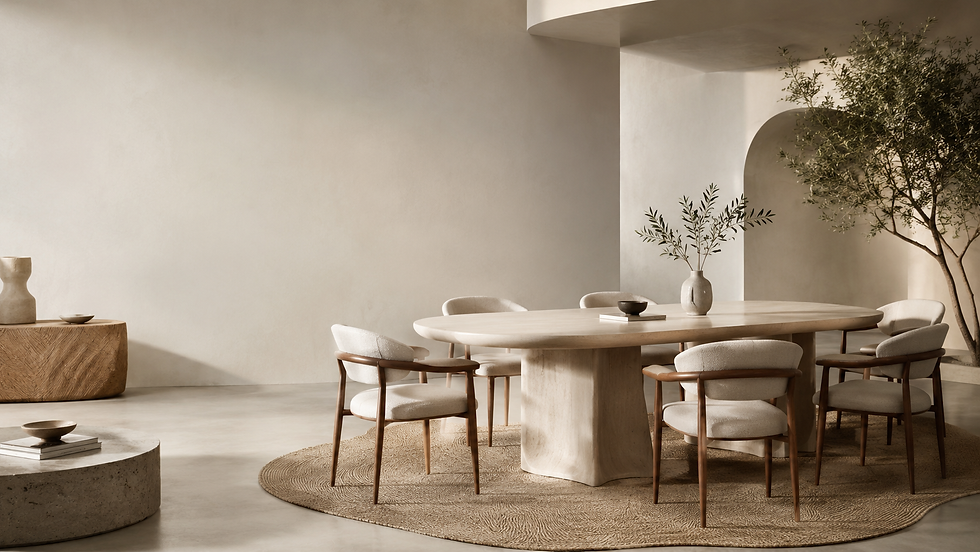
Swivel Dining Chairs: 5 Situations Where Movement Elevates Your Space

Choosing the right seating for your dining room is rarely just about color or upholstery. It is about how people move through the room, how conversations flow after dessert, and how effortlessly your home adapts between daily routines and weekend gatherings. In recent years, swivel dining chairs have transitioned from occasional accent seating to one of the most versatile solutions for contemporary interiors.
Yet, turning seats are not a universal requirement for every single dining table. Understanding where subtle rotation adds tangible value—and where traditional fixed chairs remain perfectly adequate—allows you to create a harmonious, functional interior tailored to your everyday lifestyle.
Why Swivel Dining Chairs Are Redefining Modern Living
Traditional dining chairs require you to physically drag or push back heavy legs across wood, tile, or rugs every time you sit down or stand up. Over an evening of hosting, this constant scraping disrupts the acoustic calm of the room and creates visual disarray around the table.
By integrating a smooth 180-degree or 360-degree rotating base—frequently paired with an auto-return mechanism—modern swivel seats eliminate the physical struggle of getting in and out. Instead of shifting the entire chair, you simply turn gently toward your companion or step smoothly away from the table. This understated movement fosters an atmosphere grounded in ease, dialogue, and architectural order.
5 Scenarios Where Swivel Dining Chairs Truly Shine

To determine whether turning seating belongs in your dining layout, consider how your household actually uses the room on a regular basis. Here are five everyday situations where rotational movement delivers an immediate upgrade to comfort and space planning.
1. The Open-Plan Kitchen and Living Area
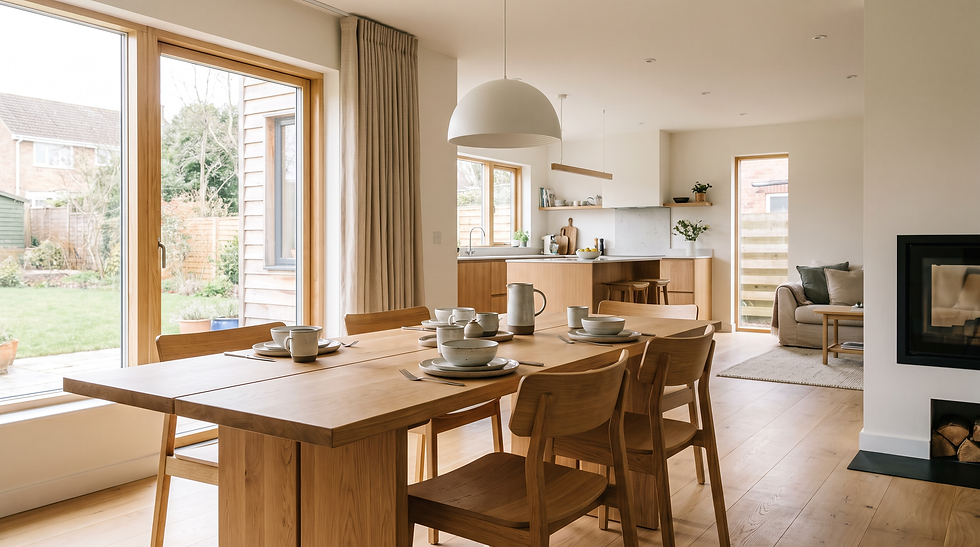
Modern open-concept layouts blur the boundaries between food preparation, dining, and lounging. In these combined zones, static seating forces a rigid, one-directional posture facing the center of the table.
A rotating seat allows you to smoothly pivot between the dining table, the kitchen island, and the living area without leaving your place. Whether you are checking on a simmering pot while chatting with guests or turning to face the sofa area during a family evening, movement keeps the host and guests visually and socially connected.
2. Lingering Conversations After Dinner
The best dinner parties rarely end when the plates are cleared. When conversations stretch late into the night, the physical constraints of a rigid chair often lead to restless shifting and stiff posture.
Choosing a supportive swivel armchair dining model with generous armrests and an upholstered shell encourages natural posture micro-adjustments. Guests can turn effortlessly toward whoever is speaking across the table, maintaining open body language and sustained relaxation without rearranging furniture.
3. Compact Dining Nooks and Tight Passageways
In urban apartments or narrow dining zones, pulling back a standard chair can block adjacent walkways, bump into sideboards, or hit surrounding walls. This creates friction every time someone needs to leave the table.
Because rotating chairs allow you to enter and exit sideways, you require significantly less floor clearance behind the seat. The base stays anchored in position while the shell turns, preserving clear walking paths and preventing floor scratches in tighter floor plans.
4. Multi-Directional Social Hosting
When entertaining larger groups, social interaction naturally branches into multiple overlapping conversations. With fixed seating, engaging with the person diagonally across from you or seated at the head of the table requires awkward neck and spine twisting.
With smooth rotational capability, your chair follows your line of sight naturally. This fluidity transforms the table into an interactive hub where no one feels isolated or locked into a single viewing angle.
5. The Dining Table That Doubles as a Home Workspace
For many professionals, the dining table frequently serves as a secondary laptop station or a creative project desk. Standard office task chairs often disrupt the warm, curated aesthetic of a residential dining room.
A sleek rotating dining chair offers the ergonomic mobility of work seating—such as reaching for documents, turning toward a window, or standing up during quick breaks—while maintaining the refined fabric, timber, or metal finishes appropriate for modern dining room chairs.
Fixed Chairs vs. Swivel Dining Chairs: A Direct Comparison

To help you weigh your options objectively, the following table summarizes the key functional differences between stationary dining seating and rotational designs.
Feature & Characteristic | Traditional Fixed Chairs | Swivel Dining Chairs |
Entry & Exit Clearance | Requires 60–80 cm pull-back depth | Minimal clearance; side-entry rotation |
Floor Protection | Frequent friction on rugs and hardwood | Base stays stationary; minimizes drag |
Social Flexibility | Locked forward-facing orientation | Effortless 180° to 360° pivoting |
Visual Order | Often left pushed back unevenly | Auto-return bases align automatically |
Armrest Integration | Standard or armless profiles | Frequently paired as dining chairs with arms |
Weight & Stability | Generally lighter to lift by hand | Substantial weighted base for balance |
When Fixed Seating Remains the Better Choice
While rotational seating offers clear advantages for dynamic spaces, it is not essential for every household. Knowing its limitations ensures you invest with confidence:
Formal, rarely used dining rooms: If your table is reserved strictly for formal occasions a few times a year, classic fixed chairs provide timeless simplicity.
Extremely lightweight mobility needs: Because rotating mechanisms require a sturdy internal bearing and weighted base, swivel seats are heavier to carry between rooms.
Very young children: Unsupervised toddlers may treat freely spinning chairs as playground equipment unless the chairs feature high-resistance rotation or auto-return dampening.
Key Features to Evaluate Before Purchasing
If you decide that rotating seating fits your home, keep these practical elements in mind during your selection process:
Auto-Return Mechanism: A memory return mechanism automatically rotates the seat back to face the table once you stand up. This keeps your dining area looking clean and symmetrical at all times.
Armrest Clearance: When selecting dining chairs with arms, measure from the floor to the bottom of your tabletop apron to confirm the armrests can tuck neatly underneath.
Base Construction: Choose sturdy powder-coated steel, iron, or solid wood base designs fitted with high-grade protective glides suitable for your specific flooring type.
Upholstery and Cushioning: Opt for resilient, easy-to-clean fabrics or supple leather that provide long-lasting comfort across both brief breakfasts and three-hour dinner parties.
By matching the functional benefits of movement with your personal spatial layout, you can create an inviting dining environment that balances architectural poise with everyday comfort.
FAQ
Do swivel dining chairs damage hardwood or delicate flooring?
Unlike traditional chairs that slide back and forth across floorboards, the base of a swivel chair remains stationary while the upper seat rotates. Equipped with quality felt or nylon glides, they significantly reduce surface friction and protect wood and tile floors.
What is an auto-return mechanism on a dining chair?
An auto-return mechanism is an internal spring or swivel damper that gently pivots the seat back to its original centered position as soon as weight is removed, ensuring your dining table setup always looks orderly.
How much space should I leave between swivel dining chairs?
Plan for approximately 60 to 65 centimeters of table width per chair, leaving roughly 15 centimeters of breathing room between neighboring seats so users can rotate comfortably without bumping into each other.
Can swivel dining chairs fit under standard dining tables?
Most standard dining tables have a height of 74 to 76 centimeters. Standard swivel chair seat heights range from 45 to 48 centimeters, fitting comfortably underneath. If your chairs feature armrests, verify that the arm height is at least 2 to 3 centimeters lower than the table apron.
Find the Perfect Seating Flow for Your Dining Space
Save your favorite swivel dining chair designs and consult with our interior specialists to ensure the ideal dimensions, comfort level, and movement for your home.


Comments